

28
Aug
Commercial Mold & Indoor Air Quality: Protecting Tenants, Employees, and Your Bottom Line
Protecting Tenants, Employees, and Your Bottom Line
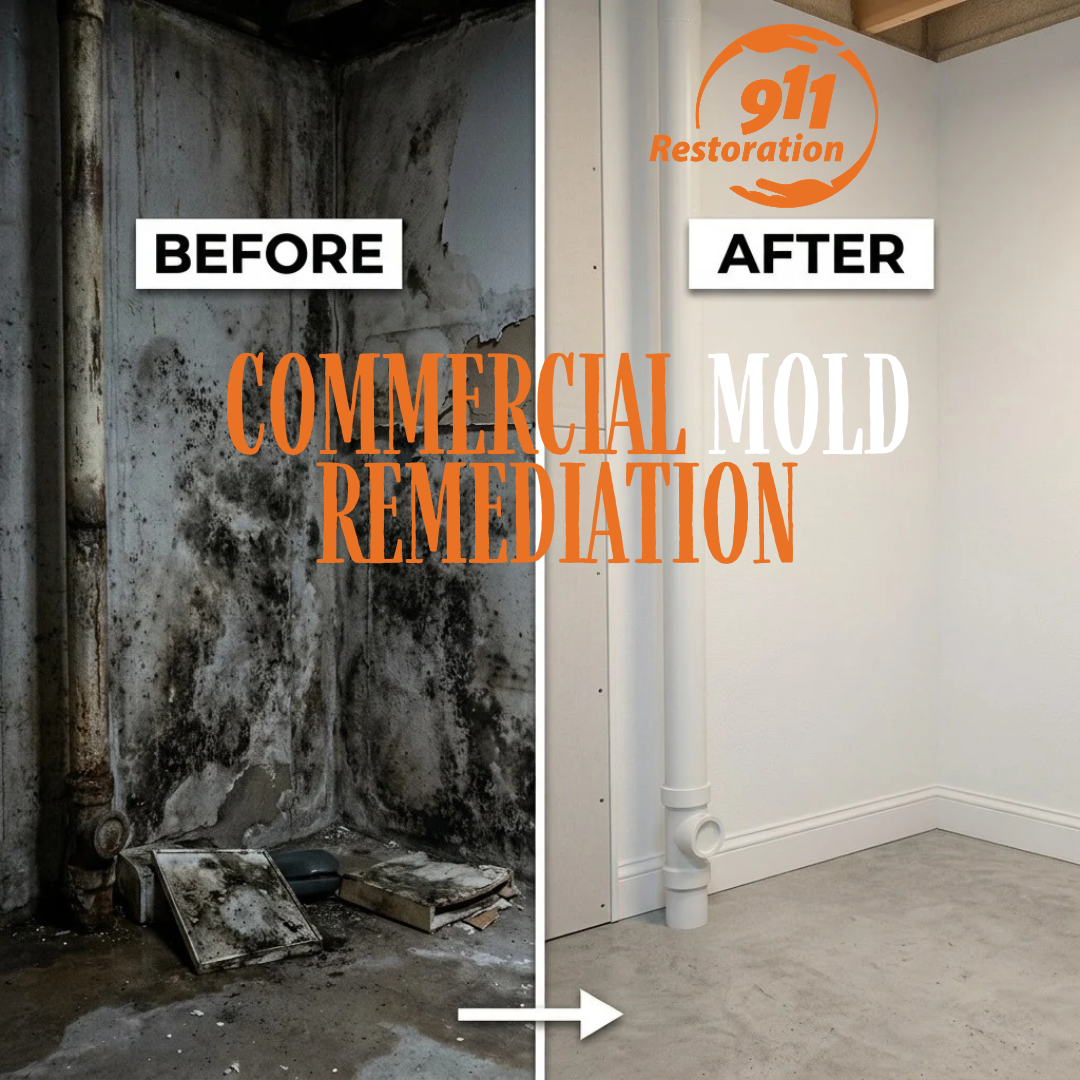
For property managers, facility directors, and business owners across Northwest Arkansas (NWA), maintaining a commercial building involves far more than aesthetics and standard facility upkeep. In the rapidly growing Bentonville-Fayetteville corridor, high humidity, heavy seasonal precipitation, and complex HVAC infrastructure combine to create a subtle threat that can quickly jeopardize your revenue: hidden moisture and commercial mold.
Whether you manage a corporate campus in Bentonville, an office park in Rogers, a multi-family property in Springdale, or a retail facility in Fayetteville, indoor air quality (IAQ) directly impacts your operational success. A mold outbreak isn’t just a maintenance issue it’s a financial, legal, and operational hazard.
Here is what every NWA commercial decision-maker needs to know about commercial mold remediation, tenant safety, and protecting your bottom line.
The Hidden Costs of Poor Indoor Air Quality
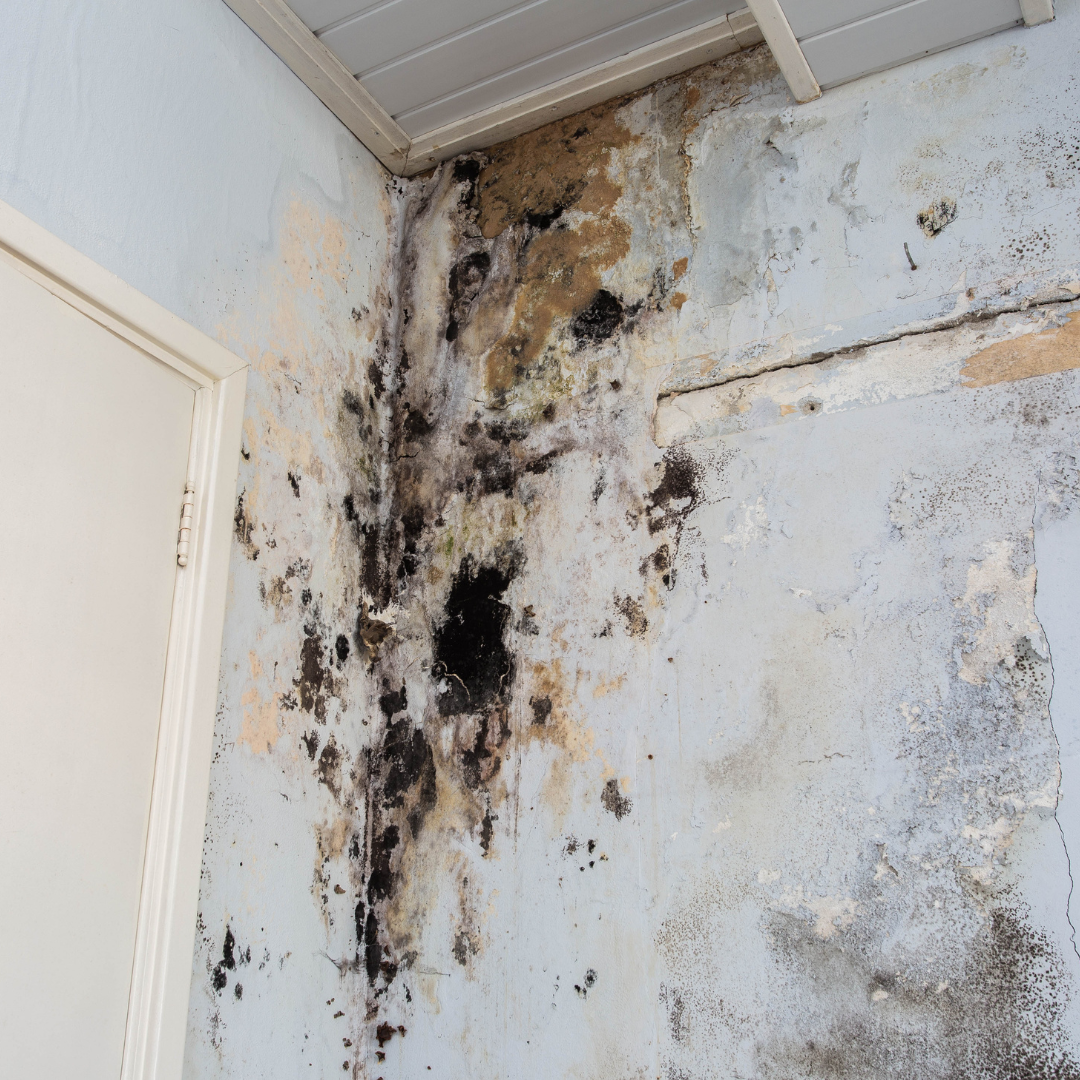
When moisture issues go unaddressed, mold spores multiply rapidly often out of sight. The financial fallout of untreated mold in a commercial space extends far beyond basic cleanup costs:
- Tenant Dissatisfaction & Lease Terminations: Persistent odors or health complaints can lead commercial tenants to demand lease concessions, withhold rent, or terminate agreements early.
- Employee Absenteeism & Reduced Productivity: Known as “Sick Building Syndrome,” poor IAQ causes headaches, fatigue, respiratory issues, and eye irritation among staff, leading to increased sick leave and reduced output.
- Liability & Compliance Risks: Property managers face strict duty-of-care expectations. Failing to address known biohazards or moisture leaks can expose your business to legal claims or regulatory penalties.
- Structural & Equipment Damage: Mold feeds on organic materials, compromising drywall, drop ceilings, insulation, and framing over time.
4 Commercial Mold Hotspots in Northwest Arkansas Properties
Northwest Arkansas’s humid subtropical climate creates year-round mold pressure. In commercial settings across Benton and Washington Counties, mold frequently hides in four primary areas:
1. Commercial HVAC Systems & Ductwork
HVAC units regulate humidity, but neglected coils, drip pans, or ductwork can collect condensation. Once mold takes hold in an air handler, the ventilation system actively distributes spores throughout the entire facility.
2. Drop-Ceiling Tiles & Roof Leaks
Commercial flat roofs are vulnerable to ponding water during heavy Ozark storm events. Water penetrating the roof membrane often pools above drop-ceiling tiles, creating hidden mold colonies before moisture breaks through to occupied spaces below.
3. Multi-Story Plumbing Risers & Restrooms
In high-occupancy commercial buildings, minor leaks in high-pressure plumbing risers, commercial restrooms, or breakroom facilities saturate surrounding walls and flooring, creating undetected moisture pockets.
4. Sub-Grade Spaces & Basements
Many commercial and mixed-use structures in NWA feature sub-grade spaces prone to moisture intrusion and dampness, which travel upward through the building via the stack effect.
Why In-House Cleanups Can Make the Problem Worse
When a maintenance worker spots mold on a tile or wall, the instinct might be to spray it with bleach and paint over it. However, DIY or improper removal often escalates commercial damage.
The In-House Risk: Wiping active mold colonies without proper negative air pressure and containment sends millions of microscopic spores airborne. These spores travel through the building’s HVAC return vents, contaminating previously clean zones and multiplying your remediation costs.
Bleach kills top-layer mold on non-porous surfaces, but it does not penetrate porous materials like drywall or ceiling tiles to destroy the root structure (hyphae).
The Professional Approach: Containment, Remediation, and Compliance
Proper commercial mold remediation requires a methodical, containment-first approach to protect occupied areas while work is performed.
Here is how a certified commercial restoration team handles mold:
- Comprehensive Moisture Mapping: Utilizing infrared thermal imaging and moisture meters to locate the exact source of water intrusion behind walls and above ceilings.
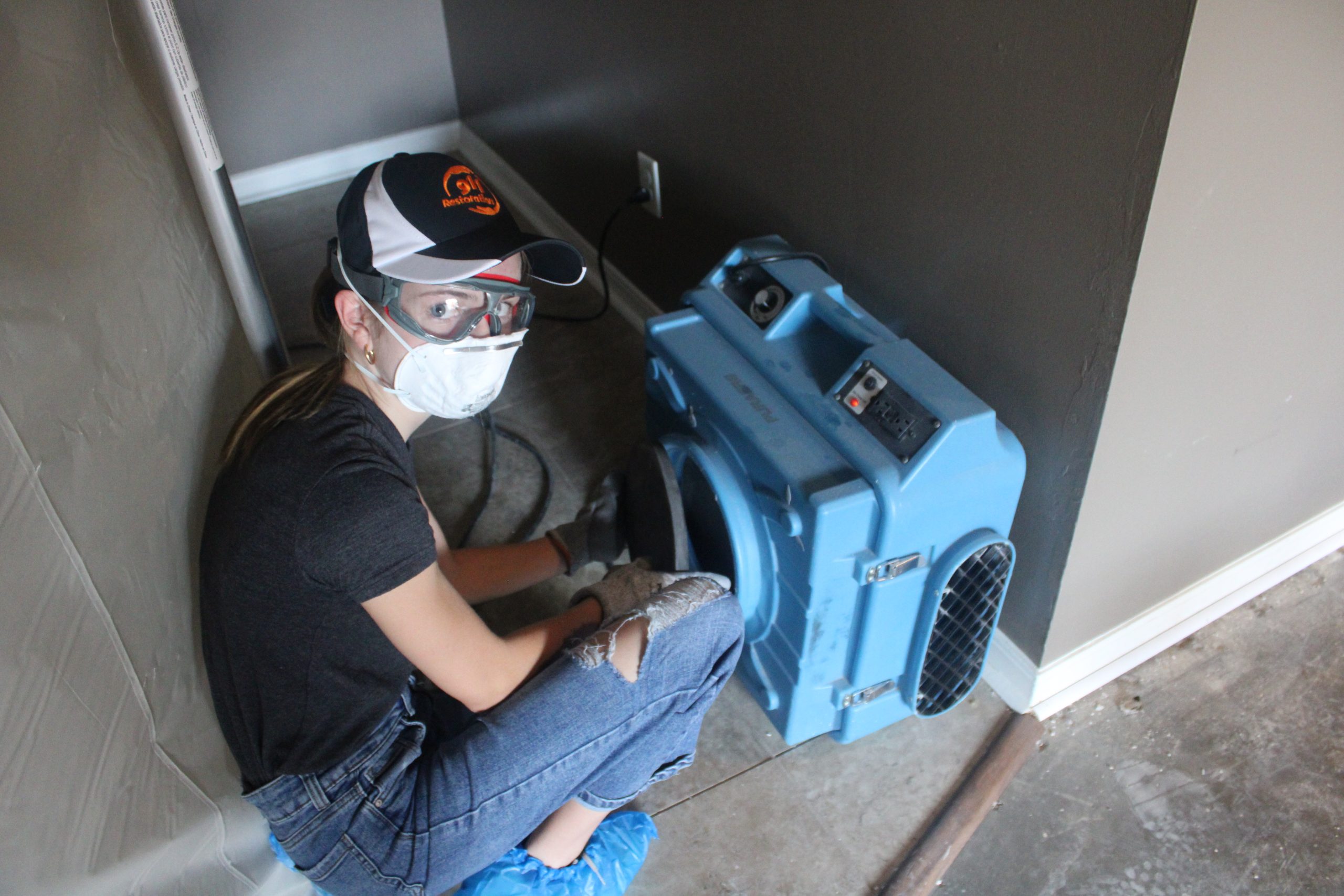
- HEPA Containment Barriers: Setting up critical plastic barriers and negative air pressure machines to prevent spores from escaping into unaffected hallways, suites, or tenant spaces.
- Safe Removal & HEPA Vacuuming: Removing compromised porous materials safely and using HEPA-filtered vacuum systems to capture airborne particulates.
- Antimicrobial Sanitization & Structural Drying: Deep cleaning remaining surfaces with EPA-registered antimicrobial agents and using industrial-grade dehumidifiers to eliminate residual moisture.
- Post-Remediation Verification: Documenting that moisture levels have normalized and providing air testing verification to confirm the space is safe for re-occupancy.
Protect Your Property and Bottom Line with 911 Restoration of NWA
Proactive moisture management and swift professional action are your best defenses against commercial mold damage. Addressing mold early protects your building’s physical assets, keeps your tenants and employees healthy, and ensures your operations stay running without costly downtime.
If you suspect mold, notice musty odors, or recently experienced a water leak in your Northwest Arkansas commercial property, don’t wait for the problem to spread.
Call 911 Restoration of NWA today. Our IICRC-certified commercial restoration specialists provide 24/7 rapid response, professional mold inspections, and comprehensive remediation services tailored to businesses across Bentonville, Rogers, Springdale, Fayetteville, and surrounding areas. Contact us today at 479.223.5148.
Latest Posts
Contact Us
For Advice
Need help? Talk to an expert
(479)-223-5148